
Brownbody, Ritual, and the Long Arc of Collaboration
Some collaborations begin with a formal commission or a neatly outlined proposal. Others emerge more gradually through conversation, shared language, overlapping artistic interests, and a growing recognition that certain questions are larger than any single project. What unfolds this summer between Brownbody and the Painted Bride Project Space falls into the latter category.
Across screenings, residencies, workshops, public conversations, and interdisciplinary performance development, a larger collaborative world is beginning to enter public view across Philadelphia. At the center of that unfolding is Infinite Slow Drive / Obsidians in the Wild, a large-scale interdisciplinary performance project building toward a Philadelphia premiere in 2027.
Founded by choreographer and former competitive figure skater Deneane Richburg, Brownbody is a Twin Cities-based all-Black dance company whose work blends movement, theater, social justice practice, and skating culture through performances, films, workshops, and community engagement. Over time, conversations between Richburg and choreographer, performer, and educator Lela Aisha Jones evolved into an expanding artistic relationship rooted in shared interests around movement, ritual, visibility, memory, and Black cultural traditions of gathering and expression.
Those conversations eventually widened into a broader collaboration with Painted Bride Project Space, where the relationship now continues unfolding publicly through Philadelphia-based activations and long-term performance development.
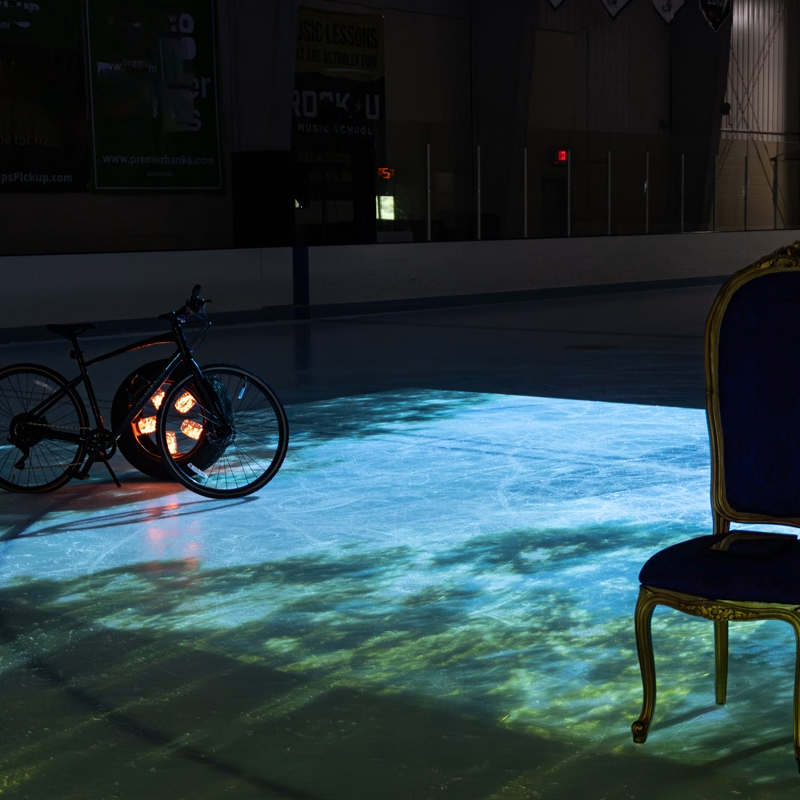
The work itself moves across multiple forms at once: skating, procession, sound, projection, oral history, adornment, installation, public gathering, and movement performance. Some parts arrive through intimate conversation. Others arrive through large-scale visual presence.
For Jones, many of the emotional and visual foundations of Infinite Slow Drive stretch back to her upbringing in Tallahassee, Florida, where dance, church, family gatherings, and Black communal life shaped her understanding of movement long before it entered formal performance spaces.
“Much of my childhood revolved around attending dance school, going to my grandparents’ house for backyard barbecues, going to church, and being surrounded by Black folks living out loud,” Jones says. “They made sure I felt I could do anything.”
That sense of visibility, pride, rhythm, and collective presence continues echoing throughout the project’s evolving performance world. Among the strongest visual references are traditions of strolling, cruising, procession, and customized car culture.
Movement can become personal creative expression and public ritual at once.
“It was about how you carry yourself, how you show up with intention and pride,” Jones says.
Elsewhere in the work’s visual language are memories of sound systems powerful enough to virtually reshape your heartbeat, and therefore public space itself.
“As teens, we would go out to the park, and there would be these candy-painted cars with glistening rims, all lined up,” she recalls. “The sound systems would vibrate through you.”
These memories do not appear inside Infinite Slow Drive as nostalgia alone. Instead, they function more like living cultural architecture, forms of gathering, movement, adornment, and visibility that continue carrying social, emotional, and communal meaning across generations.
The collaboration’s public unfolding at Project Space begins now with a screening and sneak-preview event featuring Tracing Sacred Steps, a completed Brownbody film work by Deneane Richburg, alongside early preview materials for Infinite Slow Drive / Obsidians in the Wild. The evening opens audiences into a larger interdisciplinary ecosystem still expanding through residency work, community dialogue, and future public activations across Philadelphia and Minneapolis.
Additional phases throughout 2026 and beyond include residencies, workshops, oral histories, skating activations, public conversations, and large-scale performance development connected to the project’s evolving trajectory toward 2027.
For Painted Bride Project Space, the collaboration reflects a continued commitment to supporting interdisciplinary artistic practice that moves fluidly between performance, community engagement, experimentation, and public process. The relationship also reflects the role collaborative development and long-term artistic partnership can play in helping ambitious projects grow across time, geography, and community context.
What emerges publicly over the next two years will continue taking shape through artists, collaborators, audiences, neighborhoods, and shared cultural memory.
In some ways, the 2027 performance is less a singular arrival than a larger formalization of something already unfolding now through conversation, gathering, rehearsal, and collective presence.
In other words…
The “procession” has already begun.
Let’s go.